

Creatine for brain health is gaining attention in 2024 for potential cognitive benefits beyond muscle and sports performance. But does it really enhance memory, focus, or protect against neurodegenerative decline? Here’s what the latest research says, plus realistic steps, surprising tricks, and essential pitfalls you must avoid.
Key Takeaways
- Moderate evidence supports creatine’s positive effects on memory and processing speed, but not all cognitive benefits are well proven yet.
- Optimal brain benefits may require different dosing or duration than muscle-focused protocols, with best results seen in adults aged 18–60.
- Long-term safety and side effects for brain health applications remain underexplored—always proceed realistically and consult your healthcare provider.
- What Is Creatine for Brain Health & Why Should You Care?
- How to Use Creatine for Brain Health: Step-by-Step Guide
- Advanced Analysis & Common Pitfalls
- Conclusion
- FAQs
What Is Creatine for Brain Health & Why Should You Care?
Creatine is a naturally occurring compound best known for supporting muscle energy, but emerging science suggests it could also fuel your brain. In recent studies, creatine supplementation has shown statistically significant improvements in memory and processing speed, especially for healthy adults and those under cognitive fatigue or sleep deprivation.
Unlike its rapid muscle gains, creatine’s effects on brain function are more subtle and variable. The biggest benefits appear for working memory, attention, and speed of information processing, rather than overall IQ or general cognition. Interest is also growing for applications against neurodegenerative diseases, but the evidence is early-stage and still developing.

How to Use Creatine for Brain Health: Step-by-Step Guide
- Decide Your Goal: Are you looking for a short-term focus/memory boost under stress, or do you want potential long-term neuroprotection?
- For quick cognitive performance (such as after sleep loss), research supports a single high dose—typically 15 to 20 grams—can help for several hours.
- For ongoing brain support, studies use daily intakes of 2 to 5 grams, similar to fitness recommendations for muscle health.
- Choose the Right Type of Creatine:
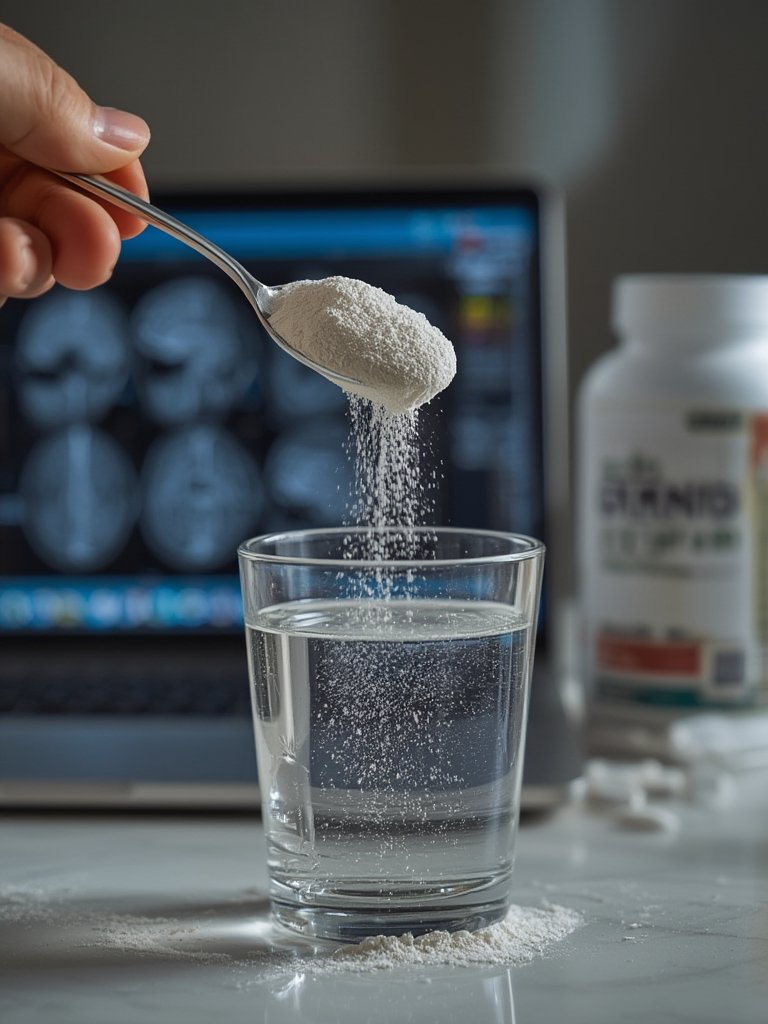
pharmaceutical grade creatine monohydrate powder is the most researched and cost-effective for both cognitive and muscle uses.- Look for pharmaceutical grade creatine monohydrate powder or capsules. Avoid “creatine blends” that add unproven forms.
- Determine Your Dosage & Duration:
- If aiming for acute effects (such as a big exam or all-nighter), take 15 to 20 grams mixed in water. Effects begin at 3 hours, peak at 4 hours, and can last 8 to 9 hours. More details here.
- If using chronically for gradual neuroprotection, choose 3 to 5 grams per day. Early positive effects may appear after 4 weeks, with brain creatine increases (e.g., 11% after 8 weeks in Alzheimer’s research, as shown here).
- Monitor for Real-World Effects: track memory, focus, and mental quickness using a simple notebook or a cognitive app.
- If you experience headaches, GI upset, or unexpected side effects, reduce the dose or pause. Although studies show creatine is “well tolerated” for cognitive use, everyone reacts differently.
- Layer with Other Lifestyle Strategies: Creatine is not a miracle pill. It works best paired with good sleep, hydration, and balanced nutrition.
Want extra details on gender-specific creatine strategies? Check out Creatine for Women: 7 Best Ways to Build Muscle and Creatine for Women: 7 Amazing Ways to Boost Memory and Strength—both explore memory and strength effects across different demographics.
Advanced Analysis & Common Pitfalls
Even with promising data, using creatine for brain health comes with some real-world hurdles. Here’s what research and users need to watch out for:
- Long-Term Risks and Unknowns: Most studies are short term (weeks to months). There is little published data on neurological side effects, drug-supplement interactions, or unique risks for those with pre-existing brain conditions. Safety profiles are mainly based on muscle studies and may not fully translate to the brain.
- Confusing Dosing Protocols: Unlike for muscle growth, dosing for neuroprotection is inconsistent. Some positive studies use brief, massive doses for acute situations (like sleep deprivation), others use standard “muscle” doses over months. No single clinical guideline exists.
- Overhyping the Benefits: While improvements in memory and processing speed are real for many, creatine is not a magic bullet. Its impact on global cognition, aging, or neurodegenerative outcomes is moderate at best, with only pilot data in Alzheimer’s and no real evidence for Parkinson’s or ALS.
- Not All Users Respond Equally: Some get more memory/focus benefit than others, and women or older adults may show slightly smaller effect sizes for memory. Unexplored factors—like genetics or dietary creatine intake—may play a role.
| Cognitive Function | Reported Benefit | Population | Certainty Level |
|---|---|---|---|
| Memory | Small but significant increase (SMD=0.31) | Healthy adults | Moderate |
| Attention & Processing Speed | Improved | Healthy adults/sleep-deprived | Low |
| Executive Function, Alzheimer’s | Almost significant improvement | Alzheimer’s patients | Low |
| Overall Cognitive Function | No clear effect | Healthy adults | Low |
For deeper breakdowns on both muscle and mental benefits, browse Creatine For Women: 7 Amazing Ways to Build Muscle and Protect Bone and the full 2024 meta-analysis on creatine for brain health.

Conclusion
Current research suggests creatine for brain health delivers genuine, measurable improvements in memory and focus—especially when sleep-deprived or under mental strain. However, the overall effect sizes are moderate, best seen in 18–60-year-olds, and true neuroprotection requires more evidence. Major gaps remain around long-term safety and optimal protocols.
If you’re considering creatine for brain health, start cautiously, observe your response, and talk to your doctor if you have neurological or metabolic concerns. For more guides, tricks, and supplement deep-dives, explore our fitness supplement hub or our dedicated brain and memory enhancement guides. Take your first smart, safe steps today!
FAQs
Does creatine really improve memory or focus?
The latest meta-analyses show statistically significant improvements in memory and processing speed for healthy adults using creatine. Effects are most noticeable during mental fatigue or sleep deprivation, but the effect size is moderate rather than dramatic.
Is creatine safe for long-term brain health use?
Short-term studies for neurological uses (including Alzheimer’s patients) show creatine is generally well tolerated with minimal side effects. However, long-term safety and risks specific to brain applications remain poorly studied, so consult your doctor before starting.
What’s the recommended creatine dosage for cognitive support?
No formal clinical guidelines exist yet. For acute effects (like sleep deprivation), a single high dose (15 to 20 grams) works. For ongoing support, try 3 to 5 grams daily for several weeks, but always start low and track your individual response.
Does creatine help protect against neurodegenerative diseases?
Early pilot studies show modest improvement in memory and executive function for Alzheimer’s patients, but the evidence is preliminary. Little to no reliable benefit appears for Parkinson’s or ALS so far. More long-term clinical trials are needed.
Where can I learn about combining creatine with other supplements?
For best ways to stack creatine with other fitness or brain supplements, see Exploring the Benefits of Fitness Supplements and Creatine for Women: 7 Amazing Ways to Boost Memory and Strength for evidence-based combos and real user tips.

[…] For targeted brain benefits, see our guide on Creatine for Brain Health: 7 Amazing Ways to Boost Memory. […]