

Creatine for women is now being researched and discussed more than ever—especially as awareness grows about its potential impact on muscle and bone health for women entering perimenopause and menopause. Yet confusion remains about benefits, side effects, long-term risks, and the best way to supplement for women over 40.
Key Takeaways
- Creatine can support muscle gains and modestly improve strength in women during perimenopause and menopause, especially alongside resistance training.
- Side effects for women are generally mild—such as bloating, water retention, and gastrointestinal symptoms—with no higher risks than a placebo at standard doses.
- No current guidelines exist for dosing variation between perimenopausal and postmenopausal women—creatine monohydrate remains the best-studied and safest form.
- Creatine for Women: What It Is and Why It Matters
- How to Safely Start Creatine Supplementation for Women
- Advanced Analysis: What Most Women Get Wrong
- Conclusion
- FAQ
Creatine for Women: What It Is and Why It Matters
Creatine is a naturally occurring compound in the body, primarily stored in muscle tissue, and crucial for quick energy production during high-intensity activity. For women, especially during perimenopause and menopause, creatine has gained interest for its potential to combat muscle loss (sarcopenia) and maintain strength at a time when estrogen levels decline and risks for osteoporosis and fractures rise.

Recent clinical studies published through 2024 reveal that creatine, when paired with regular resistance training, helps postmenopausal women build muscle and improve strength—but the impact on bone health alone is limited. Chronic low-dose supplementation (1–3 grams per day) over a year appears minimally effective; higher daily doses (5 grams or more) alongside exercise offer the biggest benefits for maintaining muscle and function.
For women entering perimenopause, emerging research also suggests that creatine supplementation could help counter the effects of hormonal changes on muscle and possibly bone, mostly by influencing inflammation and oxidative stress—although evidence for boosting bone density is weak.
With natural intramuscular creatine stores tending to be slightly lower in women and potentially dropping further during hormonal shifts, supplementation has become a practical strategy for active women, those aiming to preserve muscle with age, or anyone navigating menopause-related changes.
For a full explanation on the foundational science, see our deep dive into creatine vs BCAAs for women.
How to Safely Start Creatine Supplementation for Women
Starting creatine is straightforward, but there are important details women should know—especially around dose, timing, and adaptation. Here’s a step-by-step guide based on the latest research and practical clinical observations.
-
Choose the Right Creatine:
Always use pure, third-party tested creatine monohydrate—other forms (like ethyl ester or buffered creatine) are not better absorbed for women, according to studies. Look for a reputable brand.
Find our curated list of third-party-tested creatine monohydrate supplements here. -
Start Slow and Monitor Side Effects:
Begin with 2–3 grams daily for several days. Watch for bloating, stomach discomfort, or water retention. Most women note these symptoms decrease by week two. If you want faster saturation, you can load with 0.3 grams/kg/day for 5–7 days, but mild bloating is more likely. -
Increase to Standard Dose:
After one week, increase to 5 grams per day. Research shows this is safe and effective for women in both perimenopause and postmenopause, with no need to vary dosing by age or hormone status.
Read this clinical safety review for more. -
Pair Creatine With Resistance Training:
Muscle and strength improvements are greatest when creatine is used with at least two resistance training for women over 40 sessions per week.
Need a practical program? Check our free resistance training for women over 40 guide. -
Hydrate and Track Progress:
Increased water retention is common in the first 2–3 weeks—drink extra water and track body measurements to distinguish between water and muscle gain. Weight may go up slightly at first but tends to stabilize with time. -
Monitor for Drug or Medical Interactions:
Avoid creatine if you have a diagnosed kidney issue or are on known renal-impacting medications (see clinical precautions here). Always consult your doctor before supplementing if you are pregnant, recently postpartum, or managing a chronic illness.
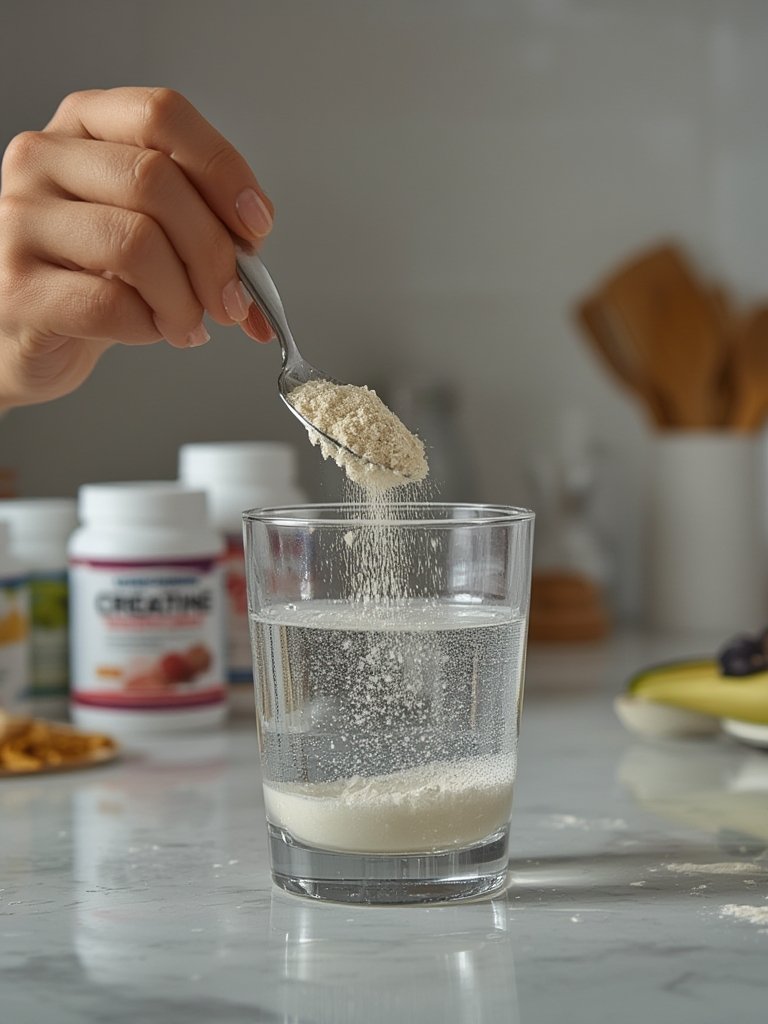
Many women also wonder about the best time to take creatine. The difference between morning and evening dosing is minimal—consistency matters far more. Take it at the same time daily for best results.
For more insight on creatine timing, read our article Can Women Take Creatine at Night.
Advanced Analysis: What Most Women Get Wrong
Despite its safety record, creatine for women still raises concerns. Here’s a realistic look at common pitfalls, the latest science, and what may not be obvious on social media or most blogs.
-
Expecting Dramatic Bone Benefits:
Current evidence shows that creatine is not a stand-alone solution for bone density. Improvements in bone markers may occur, but increases in bone mineral density are not significant—especially without exercise. -
Mistaking Water Retention for Fat Gain:
Initial bodyweight gains (often 1–3 lbs) are due to increased muscle hydration, not fat. This is temporary and not associated with changes in body composition at standard doses (full details here). -
Stopping Creatine Due to Temporary GI Symptoms:
Up to 80 percent of women report mild stomach upset or bloating during the first week, but these effects usually fade quickly as the digestive tract adapts. -
Choosing the Wrong Product:
While many “creatine for women” formulas market fancy additives or alternate creatine types, monohydrate is the only form proven by research. Avoid pricey blends without clinical backing. -
Expecting Hormone-Specific Formulas to Outperform:
No evidence supports unique dosing or ingredient combos specifically tailored to perimenopause or postmenopause. Standard dosing and good resistance training are key.
| Issue | What Research Shows | Reality Check for Women |
|---|---|---|
| Fat/weight gain | Temporary water retention, no fat gain with standard dose | Expect up to 3lb scale increase in first weeks—normalize after adaptation |
| Bloating/Stomach upset | Common in 80% during first week, resolves with time | Split dose or take with food to minimize discomfort |
| Bone health impact | Minimal effect on density, small gain in markers with resistance training | Do not replace osteoporosis medications, but may help with exercise program |
| Kidney, liver, or heart safety | Safe in studies at standard doses, not advised for known kidney disease | Consult your doctor if you have pre-existing organ issues |
| “Special” formulas for women | No evidence alternative creatines or blends are superior | Buy plain creatine monohydrate, get third-party certified version |
For a breakdown of unwanted effects, view our complete guide to creatine side effects in females.

Conclusion
If you’re considering creatine for muscle, strength, or healthy aging, the latest evidence supports its use for most women—especially through menopause, provided you don’t have known kidney problems. Benefits are clear for muscle support (especially with consistent resistance training) though direct impacts on bone health for women are limited. Most side effects are mild and short-lived. Start slow, use only pure creatine monohydrate, and pay attention to your body as you adjust your supplement routine.
Ready to get started? Explore our analysis of the best creatine for women over 40 and take your muscle health—and overall well-being—to the next level with creatine for women today.
FAQ
Is creatine safe for women over 40?
Yes, creatine is widely studied and generally safe at standard doses for healthy women over 40. Avoid use if you have chronic kidney disease or medical contraindications. Mild bloating or stomach upset may occur at first, but serious side effects are very rare.
Does creatine cause weight gain in women?
Short term, women may see a 1–3 pound increase in scale weight due to water retention in muscles. There is no evidence for fat gain with standard dosing (3–5 grams per day).
Can creatine improve bone health after menopause?
Creatine appears to improve biochemical markers related to bone turnover when combined with resistance training, but does not significantly increase bone mineral density. It should not replace prescription osteoporosis medication.
Do women need different creatine doses around menopause?
No unique dosing recommendations exist. Standard adult doses (3–5 grams/day) work for both perimenopausal and postmenopausal women. Focus more on exercise and consistency than adjusting dose for hormone status.
Are there special blends or types of creatine just for women?
No research supports specialty blends or alternate “for women” formulas. Pure creatine monohydrate is safest and best supported by science.